

Being the Text of an Address Presented by Governor Alex C. Otti, OFR, at the Unveiling of the Abia State’s 25-Year Development Plan on Tuesday, December 16, 2025, at the International Conference Centre, Umuahia
Protocols
“If you don’t know where you are going, any road will get you there” -Lewis Carroll
“If you fail to Plan, you are planning to fail”-Benjamin Franklin
1. One of the most important lessons of history is that development does not happen by chance. A society that seeks progress must wholly commit itself to the discipline of planning — the culture of goal setting and systematic allocation of resources in ways that guide the economy along pre-determined trajectories. Following its rise to wider prominence in the aftermath of the Second World War, the principle of economic planning has been deployed in different parts of the world to pursue important outcomes within the frontlines of stability, growth, balance and optimal application of unique factor advantages to improve the material realities of the population. Planning, in the light of its proven capacity to transform social and economic outcomes, has become a central function of governments in the push to optimise output values from every unit of factor input. While planning offers a unique set of advantages to those who understand its importance in the development matrix, real success requires diligence in execution, attentiveness to environmental dynamics and the wisdom to make relevant changes as the foundational assumptions evolve. The logic of planning is therefore not in the certainty of its prediction but in the shield that it offers against the anarchy of uncertainties.
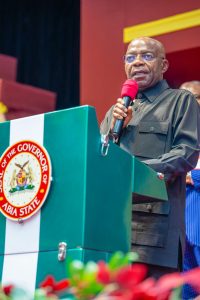
2. Distinguished ladies and gentlemen, we have gathered this afternoon, not to cast Abia in the light of an imaginary El Dorado by 2050 but to present a holistic development framework upon which our policy direction and resource allocation outlook would be evaluated. The 25-Year Abia State Development Plan which we shall unveil shortly is a dynamic document that captures our resource advantages as a State, our current position on the development ladder and where we hope to be in the next 25 years as we commit ourselves to certain decision pathways with respect to public sector spending, effective governance paradigm, process strengthening and consistency in building the competencies of our people and institutions. Permit me to acknowledge the existence of a 30-year development plan launched by the State in 2020. Unfortunately, the local and international fundamentals have drastically changed requiring that a new and more realistic plan be put in place to help reposition Abia and enable it mine the new wave of opportunities that have developed in the larger macroeconomic space on account of landmark legislations, constitutional changes and executive decisions of the new federal and state administrations.
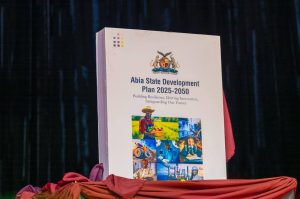
3. Beyond the notable external events, the speed of progress recorded on multiple economic frontlines in the State over the last 30 months have also necessitated some key changes in the original plan as many of the principal assumptions have since become obsolete, making it necessary to recalibrate and recast the foundational pillars for a more resilient economic superstructure. In Abia today, the expectations are much higher, the enthusiasm of the public is rising and across the land, a new wind of optimism is blowing so adjustments have been made to accommodate the faith of our people in the promises of the future. To better appreciate the rationale for putting in so much work on a 25-year development plan, look around this auditorium and take note of the body of partners joining us for this exercise; you would observe in an instance that we now enjoy a great amount of goodwill from leading players in the regional and multinational development space. The confidence of global institutions in Abia is rising and you would agree with me that the attention of development partners in any community raises public expectations and demands the adoption of significantly bolder initiatives to signpost the beginning of a new era. This event ultimately speaks to 3 things, the first is the readiness of Abia to mine the gains of the new opportunities in the macroeconomic space, the second is the codification of our development vision into a holistic framework to form the foundation of future prosperity and the third is to announce the emergence of Abia as a major development frontier in this region and beyond.
4. I would like to take a moment to specially thank everyone who actively contributed to putting together this extensive body of works that mirrors the collective expectations of every stakeholder group in the State. Thank you for the multi-fold layers of efforts you have put in — studying and reviewing documents, interacting with stakeholder groups, sharing ideas in different subcommittees and traveling round the State and beyond for on-the-spot assessment of resource centres. Special gratitude is due to members of the State’s Economic Management Team for the brilliance of their work and the commitment to getting this project over the finish line in good time. Commendations are also due to the leadership and members of the Abia Global Economic Advisory Council (AGEAC) for providing important directions, guiding the team and enriching the document with their extensive knowledge and experience on economic, financial and general frame of development interests. We owe the Co-chairs of AGEAC, Prof. Arunma Oteh, Emir Muhammed Sanusi, Mr. Bolaji Balogun and Mrs. Ifueko Omogui Okauru and other members, a debt of infinite gratitude for their tireless commitment to the New Abia project. Thank you for all the work you do for our people and for believing in the future of this State. I had earlier mentioned that the growing confidence of several regional and international development partners in our economic trajectory has opened new doors of opportunities for the State. Today, I am particularly glad to acknowledge the multidimensional contributions of the United Nations Development Programme (UNDP), Foundation for Partnership Initiatives in the Niger Delta (PIND) and Partnership for Agile Governance and Climate Engagement (PACE) to the successful completion of the 25-year development plan of our dear State. We could not have come this far without your dedication and zeal for accelerated development. Permit me, distinguished ladies and gentlemen, to also say a word of appreciation to our partners from PricewaterhouseCoopers (PwC) for their professional insights and committed support to improved governance architecture which is at the heart of the document we shall shortly unveil. One and all, we acknowledge you for your guidance in reviewing the original plan put together by our predecessors and for injecting fresh ideas that align with our governance vision as captured in our manifesto, the Transition Council documents, appropriation documents and general policy framework of the State Government. Thank you for scouring through thousands of documents in the effort to produce a Plan that would stand the test of time. As you may be aware, putting a brilliant plan together as you have done, is only the beginning of the journey. To get to the destination we desire, more effort shall be required to keep us on track and cut out distractions. We shall therefore continue to rely on your collective wisdom to navigate the storms that are inevitable in today’s world of uncertainties and complexities.
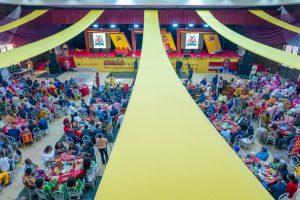
5. As I had earlier pointed out, having a development plan is not a license to daydream. Many of us in this room know several instances of development documents that were tossed aside quickly after they were unveiled and this happened for a number of reasons. The first is the absence of legislative framework to instil discipline in execution. The second is the inability to realistically anticipate bumps and outline mitigation measures or as we see all the time, the reckless pursuit of private interests by political actors and the absence of a suitable framework for calling them to order. All of these pitfalls have been carefully noted and in line with our determination to achieve the priority targets as captured in the Plan, we have anchored our aspirations on a firm legislative foundation through the State House of Assembly so what we are about to unveil is more than a proposal, it is a binding law that this administration and the ones to succeed it are obliged to follow over the next two and half decades. Beyond the legislative imprimatur which makes the outlook in the Plan difficult to sidestep in pursuit of some fanciful but unconnected projects and programmes, this document represents the collective aspirations of every segment of our community, every demographic and every socio-economic interest. It has also made conscious accommodation for the needs of future generations. It then follows that whoever wishes to make changes to the Plan would have to return to the people and convince them on the rationale for pressing to sail in a different direction. The uniqueness of the document before us is in the fact that it is not the ideas of a few eggheads but the expectations of the entire Abia community going into the future.
6. Starting from the 2026 fiscal year, our annual budgets, project mapping and implementation plan would draw extensively from the broad outlines set out in the Development Plan — it would provide the basis for evaluating our progress and identifying gaps on critical measurement parameters. As the Honourable Commissioner for Budget and Planning, Mr Kingsley Anosike, rightly noted in his overview, the Document has outlined specific milestones on central indices like education, healthcare delivery, general infrastructure layout, public transportation, housing, water and sanitation, environment and other body of indicators that are relevant to our targets. The enabling law guiding the implementation of this Plan has mandated that a holistic review be undertaken at the end of every 5 years so by 2030, we shall gather again to evaluate the progress that has been made, identify where we have fallen short and then make projections into the future, leaning into what may have been learnt. While it is given that a review will be undertaken at the end of every 5 years, provisions have also been made for us to respond quickly and recalibrate expectations in the event of any major socioeconomic upheavals that are proven to disrupt projections or shatter the underlying assumptions of this Plan. We do not pray for disruptions but should there be any untoward development locally or globally over the implementation period, let it be known that we have also set modalities in place to re-assess our priorities.

7. While speaking on the floor of the State House of Assembly during the presentation of the 2026 appropriation bill a few weeks ago, I announced that our target in the next fiscal year is to reach for self-sufficiency in the implementation of our recurrent expenditure. The idea is to raise our capacity for internal revenue generation such that we shall use what we raise from within to keep government and its institutions running, pay salaries and meet our obligations to retirees. With the latitude provided by projected higher internal revenue, we shall then commit 100% of the receipts from external sources to the execution of capital projects. The calculation is that as we deliver more impactful infrastructure projects, we further boost the productivity of our factor assets leading to higher public sector income from within. With the ongoing efforts at streamlining the revenue generation system using bespoke technology tools, the transformation of the public transport system and the expansion of the urban corridor to adequately harness our real estate potential, I can optimistically forecast that in the next decade, we shall become less and less reliant on income from external sources. My buoyant expectation is firmed on the growing interest of investors who are looking to activate dormant economic assets in different communities around the State. The projection is that as the people prosper, the State will be given what is due it for creating the environment for prosperity.
8. As I conclude, permit me to remind us again that our State is in good hands, our future is bright and our dream of reaching the top is alive. The New Abia project is our collective responsibility, let us therefore rise and build a homeland that shall be the pride of our race. All that is required of us is to believe and do our part as empowered citizens. May I now invite all of us to work collectively to achieve the dream that we all hold dear so that by 2050, we shall look back and congratulate ourselves for rising to demand more from ourselves. As stakeholders, let us march forward in faith, confident that we have the wind in our sails. The future of Abia is now mapped and I shall immediately proceed to unveil it before you.
9. Thank you for listening and may God bless Abia State.
Dr Alex C. Otti, OFR,
16/12/2025